What client retention means
Client retention is how many of your customers keep coming back to you over time. A customer who books you once and never calls again is gone. A customer who books you every spring, sends you her neighbor, and calls you first when something breaks is retained.
Customers leave for all kinds of reasons. Some move away. Some find somebody cheaper. And some just forget your name, because they haven't heard from you since the last job. Your retention rate is the share of customers who stay.
Why keeping customers pays

Getting a new customer costs money. You paid for the ad or the listing, the time on the phone, and the visit to work out the price. But a customer who comes back already knows you, so the next job doesn't carry most of that cost. Getting a new customer can cost up to 5 times as much as keeping one you already have. And you're 3 times more likely to sell to a customer you already have than to a new one. That's why keeping customers raises your ROI.
How to measure your retention rate

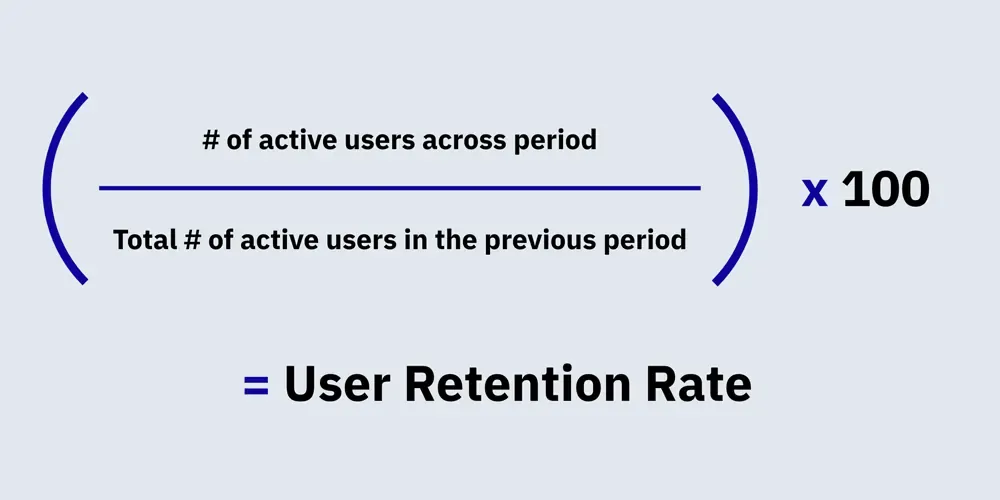
Retention is a percentage, measured over a stretch of time you pick: a month, a quarter or a year. Count the customers from the last period who are still buying from you now, divide by how many customers you had in that last period, and multiply by 100.
Say you had 200 customers last year, and 120 of them booked you again this year. 120 divided by 200 is 0.6, and 0.6 times 100 is 60%. Here's the formula as a picture. The top line means last period's customers who are still buying.
Five ways to keep the customers you have
None of these costs much. Each one gives a customer a reason to call you again instead of starting over with a search.
Make every job go the same way

Whether a customer calls you again comes down to how the last job went. Show up when you said you would, answer the phone like you're glad they called, and make the whole thing easy from the first call to the invoice.
Being the same every time matters more than being impressive once. When every visit goes the same way, the customer knows what she's getting and doesn't have to wonder about it next time. People don't want surprises from a business they're paying, even the fun kind.
Keep in touch after the job

Plenty of businesses never contact a customer again once the invoice is paid. So when that customer needs you a year later, she searches again, and you're one of a dozen names on the screen.
An email now and then keeps your name in front of them. Send a seasonal reminder, a note about something new you offer, a birthday greeting, or just a hello. Email costs almost nothing to send, and your list of past customers is already sitting in your software.
Thank your repeat customers

A thank-you goes a long way. Your customers can call somebody else any time they like, so let them know you noticed they called you.
It can be a handwritten note, a discount on the next visit, a small extra thrown in, or a gift at the holidays. A shout-out on your social pages works too, as long as the customer's happy to be named.
Ask for reviews and feedback

We wrote before about how to respond to Google reviews. Asking for the review helps you keep customers too, because it's how you find out what's making customers leave.
Ask every customer how the job went, and ask what they needed that you didn't offer. And when somebody stops booking, find out why. You can't keep customers until you know why they leave, and once you know the reason, you can deal with it before the next customer leaves for the same one.
On your own website, show the less-than-perfect reviews too. Surveys have shown that posting only good reviews on your website makes readers suspicious, and they start to believe the reviews are fake.
Keep your good help

Customers stay with businesses where they see the same faces. When the same tech shows up every time, or the same person answers the phone and knows the customer's name, she's doing business with somebody she knows, not just a company. So your people staying is part of your customers staying.
Give your people what they need to do the job well. And when they do it well, tell them.
Every one of these waits on somebody remembering
Almost every idea above depends on somebody remembering to do it: the email, the thank-you, the review request, the call to the customer who stopped booking. In a busy business, that somebody already has a full job.
That's why we build the automations your office can run. Past customers hear from you again, happy customers get asked for the review while the job's still fresh, and the messages go out on their own, in words your people approved. The job after the first one is the cheapest work in the building, and nobody has to remember to ask for it.